

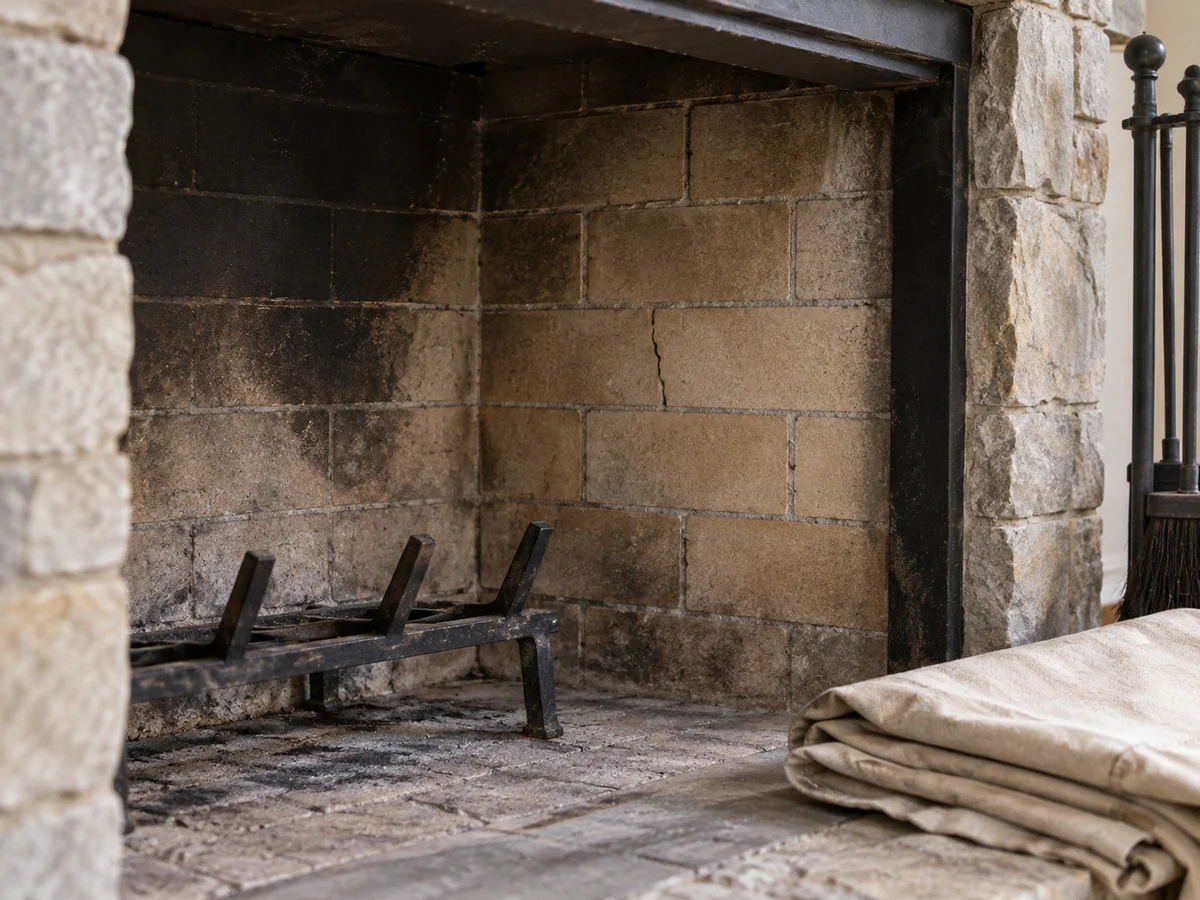
Illustrative residential fireplace as context for chimney and firebox care

Chimney / SERVICE TOPIC

Chimney Soot Removal: Signs, Causes, and Fixes

Soot is dark combustion residue that can collect in reachable fireplace and chimney areas. We identify the accessible deposit and surface before cleaning, keeping loose soot removal distinct from work on a bonded creosote layer or a damaged component beneath it.
Residue signs you may notice

  • Loose dark flakes collect in the fireplace.
  • Reachable surfaces show accumulated residue.
  • Material falls near the accessible damper area.
  • Earlier cleaning findings identify soot in a particular section.

How we remove the agreed accessible residue

  1. Review the visible deposit

    We visually assess the reachable residue before cleaning and identify the surface involved, rather than assume every dark mark is loose soot.

  2. Explain the cleaning area

    The proposed work describes the accessible fireplace or passage surfaces and their reach. Any concealed section or further access is discussed separately.

  3. Prepare the selected work area

    We consider the room and access around the fireplace so the cleaning task and material collection are kept focused on the agreed area.

  4. Brush and collect suitable deposits

    Our chimney cleaning uses brushes on suitable reachable surfaces. Strongly bonded material or component damage is distinguished from loose residue being removed.

  5. Share the visible result

    Before-and-after photographs help show the area reached. We explain deposits removed and any remaining stain, heavier buildup or physical finding requiring another task.

Loose residue and surface staining are not identical

Your proposal identifies the reachable soot-cleaning area included. Removing suitable loose material can help keep those surfaces clearer. A dark stain may remain on the material, and its appearance is different from the amount of loose deposit removed.

Soot removal beyond the basic accessible scope is quoted separately after we see your system. Basic chimney brush cleaning is $149 per chimney. Bonded creosote removal, damper repair and work on damaged liner or firebox material are separately described when required.

What happens around the fireplace

Show us where the residue collects while the fireplace is cold. Share earlier findings if they help locate the concern. We explain the accessible work before brushing and review the photographs afterward, so you know which surfaces were reached and which findings call for another service.

Firebrick and mortar inside a cold firebox

Soot-cleaning questions

Does a remaining dark stain mean no loose soot was removed?

Not necessarily. Surface color and loose deposits are different observations. We explain the material collected and the pictured surface instead of use color alone to describe the cleaning result.

Can soot removal be described as a repair to the venting passage?

No. Cleaning addresses reachable residue. A damaged part or connection needs its own assessment and proposed correction, so we keep deposit removal distinct from physical venting repairs.

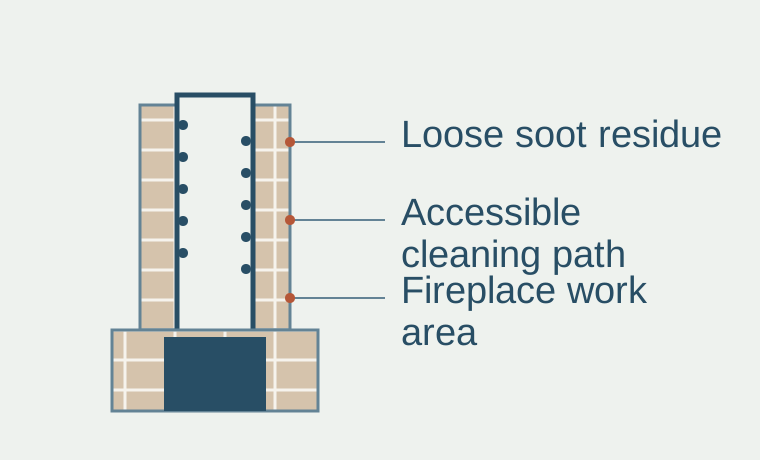
Illustrated chimney component diagram: Loose soot residue, Accessible cleaning path, Fireplace work area

Talk to Master Pro

Call or WhatsApp our office about the soot deposits you can see and the fireplace area you want cleaned.

Call nowWhatsApp