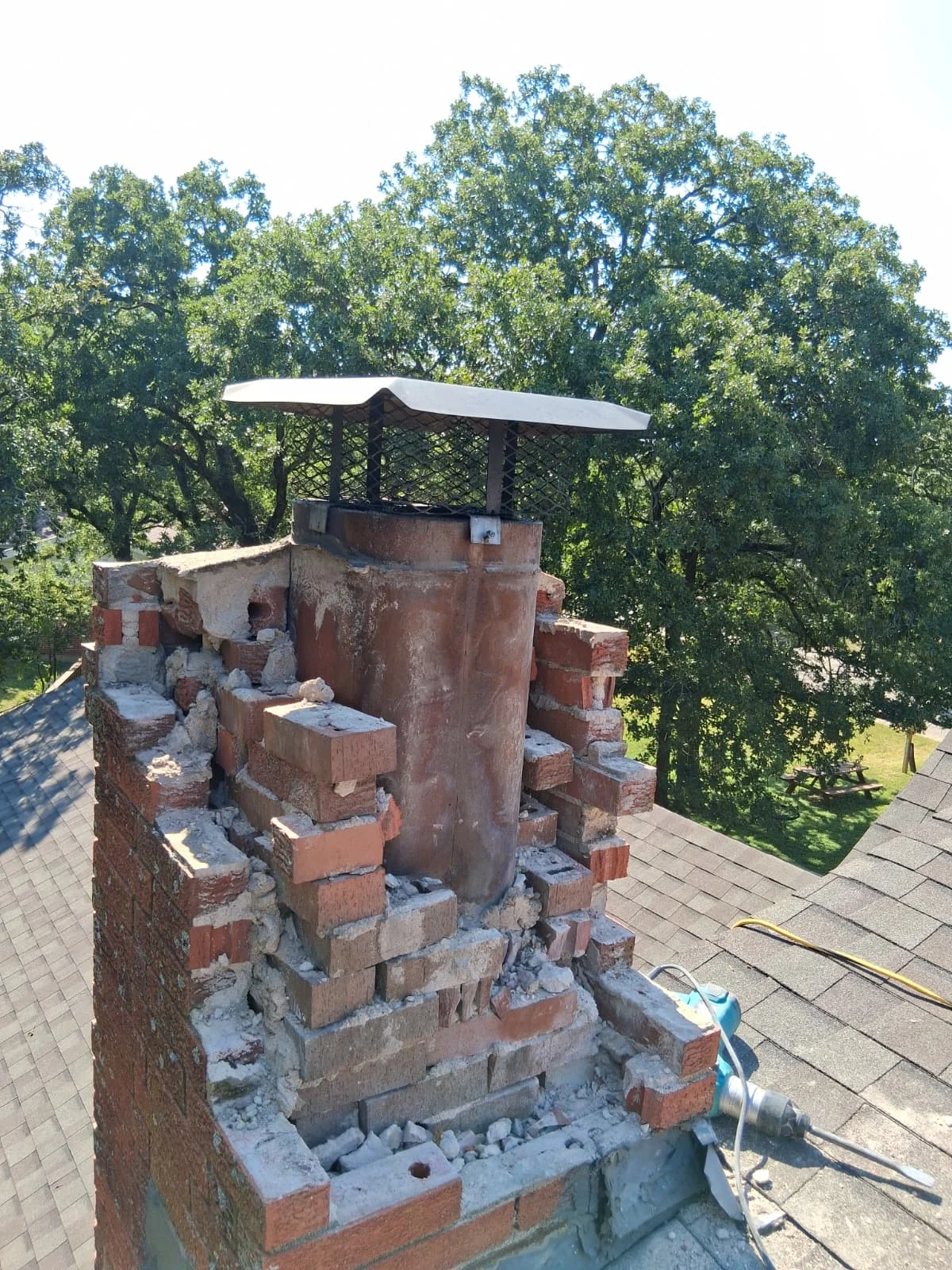
Brick chimney exterior from the Master Pro supplied work archive

Chimney / SERVICE TOPIC

Chimney Tuckpointing: Signs, Causes, and Solutions

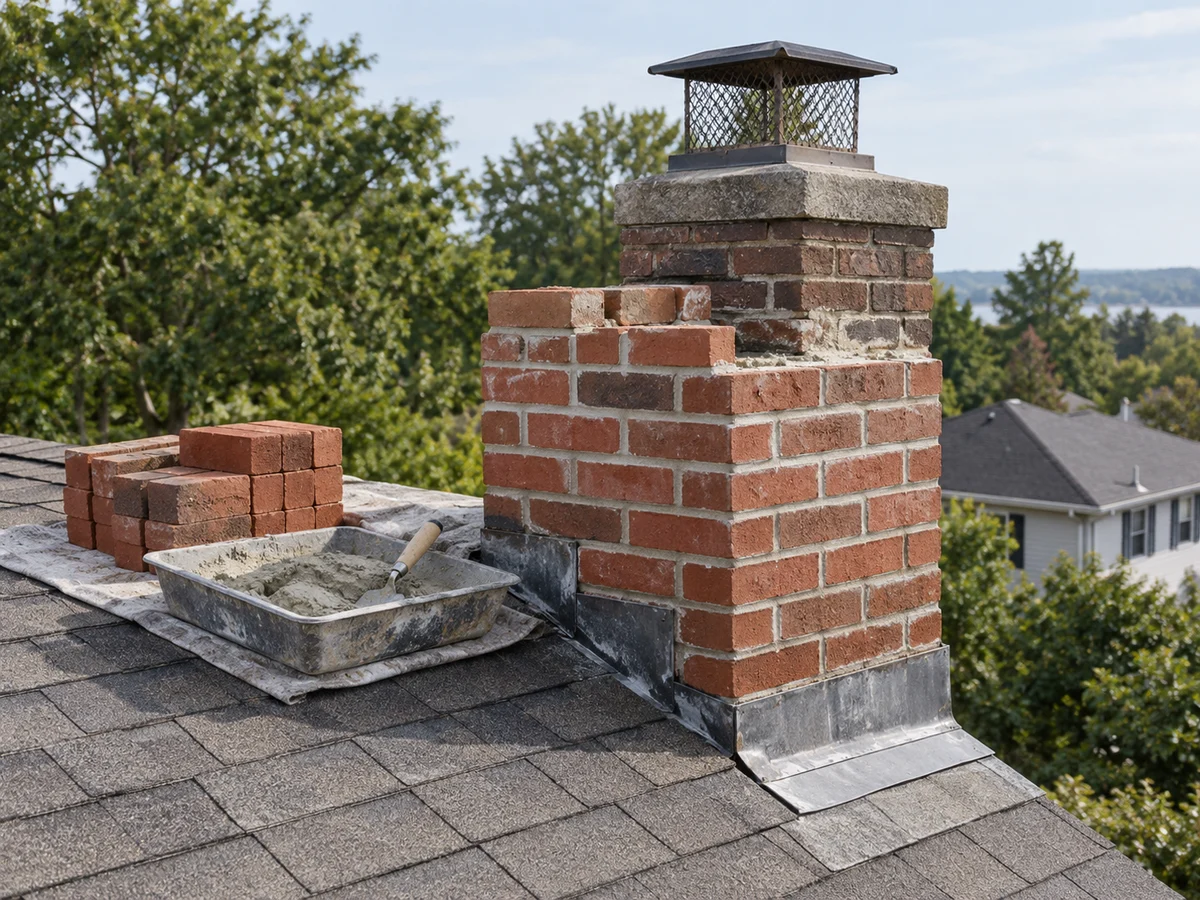
Tuckpointing renews deteriorated mortar joints between chimney bricks. We assess the joints and nearby masonry before proposing the work, so the repair addresses failed joint material rather than treat every visible crack as a simple surface-filling job.
Joint conditions worth showing us

  • Mortar is missing from reachable joints.
  • Joint material is crumbling or separating from the brick.
  • Visible cracks run through the masonry connections.
  • Weathering or staining appears beside deteriorated joints.

How we approach renewing the joints

  1. Review the affected masonry

    We identify the failing joints and look at the adjoining brick condition. Damaged brick or broader movement can require a different repair discussion.

  2. Define the joint-repair area

    The proposal describes the masonry section and access involved. We distinguish the visible repair boundary from an assumed renewal of the entire chimney.

  3. Plan compatible joint treatment

    The existing construction and material condition guide the proposed mortar and preparation, rather than choose a filling product only by its color.

  4. Renew the agreed joint material

    The work removes unsuitable loose joint material and places the proposed mortar in the selected area, with care for the adjoining masonry.

  5. Explain the visible finish

    We photograph the area before and after work, describe the joints addressed and discuss applicable care instructions and any separate masonry concern.

Mortar work is not a substitute for every masonry repair

Your quote identifies the joint renewal and affected area included. Renewing suitable deteriorated joints can help restore those masonry connections. It does not replace unsound bricks or correct an unrelated defect in a cap, cover or surrounding construction.

Tuckpointing is quoted separately after we see your system. Brick replacement, upper-component work and broader reconstruction are separate scopes if required. We discuss finishing and adjacent conditions before treating a local joint repair as a rebuild or a promise of an exact color match.

What to expect when the joints are assessed

Share exterior photos taken from a safe accessible position and point out where mortar has fallen away. Tell us about earlier masonry work if you know it. We review the affected area, explain access and the proposed treatment, then show the photographed work and describe care for the repaired joints.

Chimney masonry rebuilding context

Tuckpointing questions

Can mortar renewal fix a brick that is breaking apart?

The brick and its surrounding joint have different material conditions. We identify whether the proposal concerns joint renewal, damaged brickwork or both instead of assuming new mortar restores an unsound brick.

Why discuss mortar compatibility as well as appearance?

The joint material needs to suit the existing masonry and repair application. Color is part of the finishing discussion, but it does not establish whether a particular treatment fits the chimney construction.

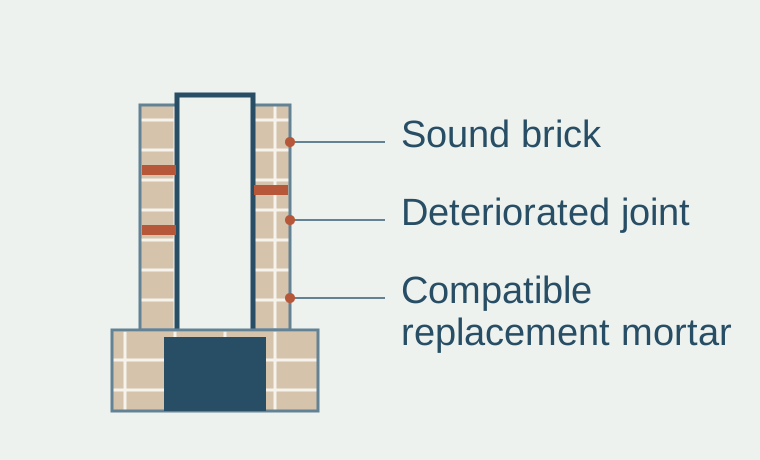
Illustrated chimney component diagram: Sound brick, Deteriorated joint, Compatible replacement mortar

Talk to Master Pro

Call or WhatsApp Master Pro about the chimney joints that are missing, crumbling or visibly damaged.

Call nowWhatsApp