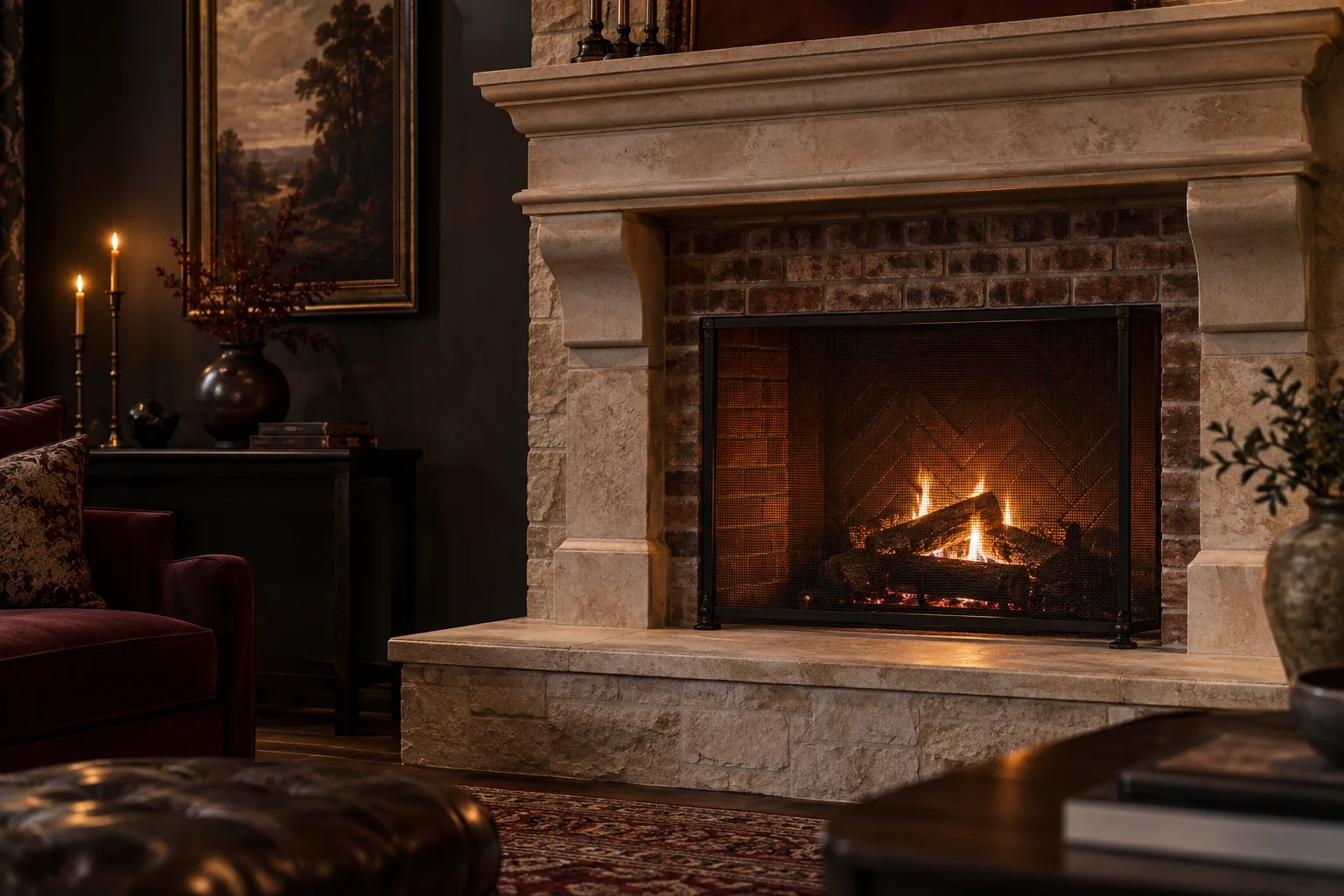
Illustrative residential fireplace as context for chimney and firebox care

Chimney / SERVICE TOPIC

Creosote Buildup Removal: Risks & Fixes

Creosote removal focuses on the deposit that has been identified and the surfaces it occupies. We distinguish loose reachable buildup from a strongly bonded layer before selecting the work, so the proposed removal method reflects the actual passage rather than a general promise to scrub everything away.
Findings that may lead to a removal proposal

  • An assessment records deposits requiring more than routine brushing.
  • A reachable surface has a stubborn bonded layer.
  • Deposit flakes remain in an accessible passage.
  • Earlier cleaning findings identify an area needing another approach.

How we define the deposit-removal work

  1. Review the identified buildup

    We consider the visible deposit and any earlier findings, locating the area before choosing a removal scope or assuming all dark material behaves alike.

  2. Consider the surface underneath

    The liner or component material and its condition guide the work. Deposit removal should be discussed alongside the surface being treated.

  3. Explain the method and reach

    We identify which areas can be reached and whether brush cleaning or a separately described approach is proposed for the particular deposit.

  4. Remove the agreed accessible material

    The selected method follows the assessment and accepted quote. We keep the task within the described passage and address component concerns separately.

  5. Document remaining and removed material

    Before-and-after photographs show the pictured area. We explain what changed, what remained and whether another review or physical repair is appropriate.

A removal proposal should identify the specific deposit

Your quote describes the affected surfaces, accessible reach and removal work included. Addressing suitable deposits can help keep those selected surfaces clearer. It does not rebuild damaged liner material or establish the condition of sections that were not reached.

Creosote removal beyond the basic brush-cleaning scope is quoted separately after we see your system. Basic chimney cleaning is $149 per chimney. Additional access, component repairs and other removal work are separately described rather than automatically included with that visit.

What happens during the removal visit

Share earlier deposit findings if you have them and show us the accessible area of concern. We explain the planned reach before starting. After the accepted work, you receive an account of the deposit removal and any remaining concern, supported by photographs of the visible surfaces.

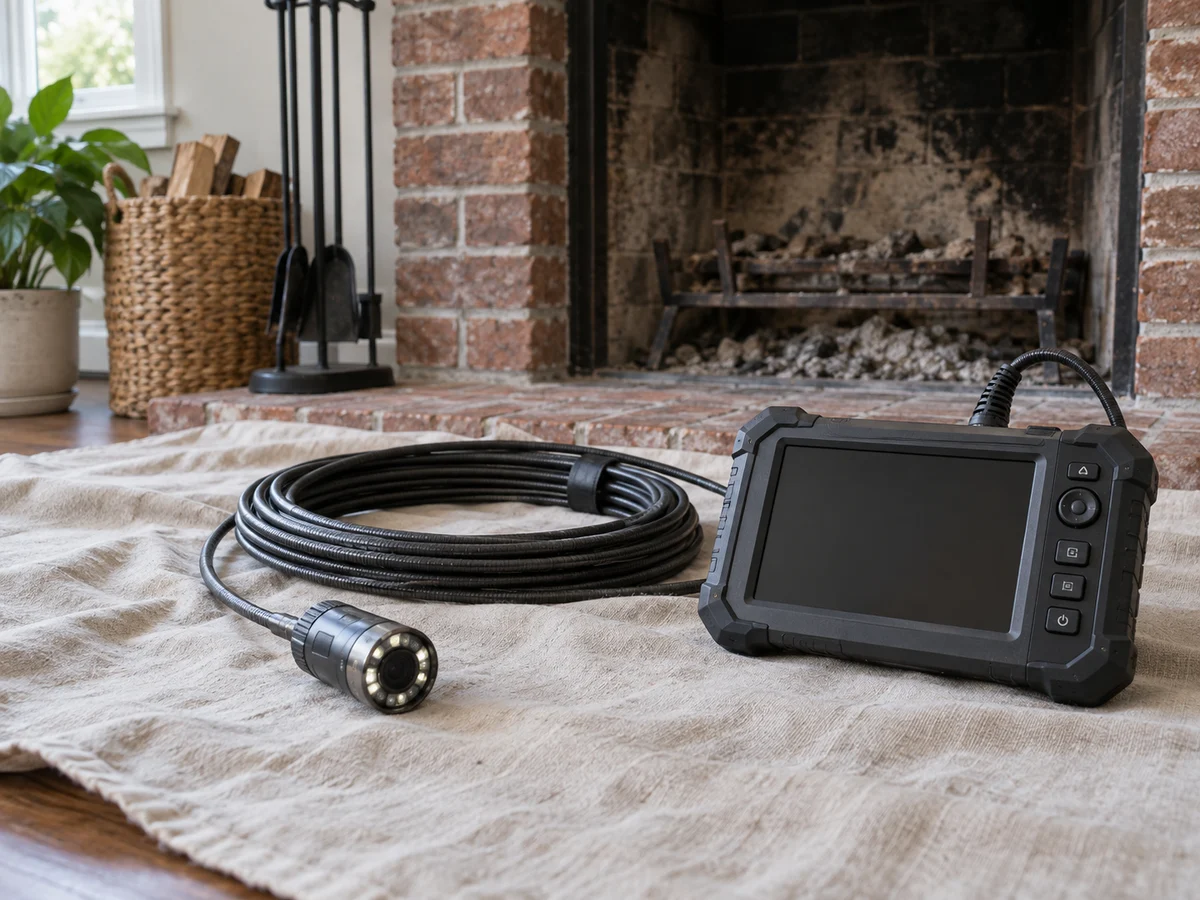
Chimney inspection camera equipment

Removal-method questions

Why not use the same brushing approach on every deposit?

Loose material and a strongly bonded layer can require different work, and the surface below matters. We explain the method proposed for the identified deposit rather than assume routine brushing fits every condition.

Can removing a layer also restore damaged liner material beneath it?

Removal addresses the deposit. Physical deterioration of the underlying surface needs its own assessment and proposed correction, even when it becomes easier to see after the material is removed.

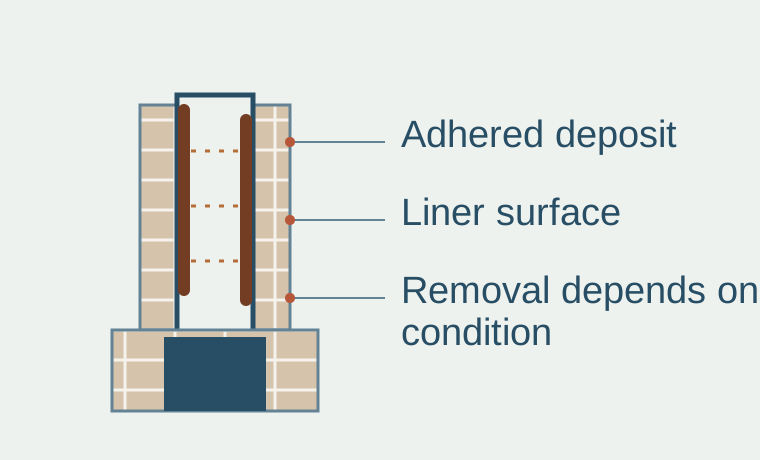
Illustrated chimney component diagram: Adhered deposit, Liner surface, Removal depends on condition

Talk to Master Pro

Phone or WhatsApp Master Pro about the deposit-removal finding and the chimney area that needs attention.

Call nowWhatsApp